I Built ERA Group Across 60 Countries. Here Is What I Would Do Differently.
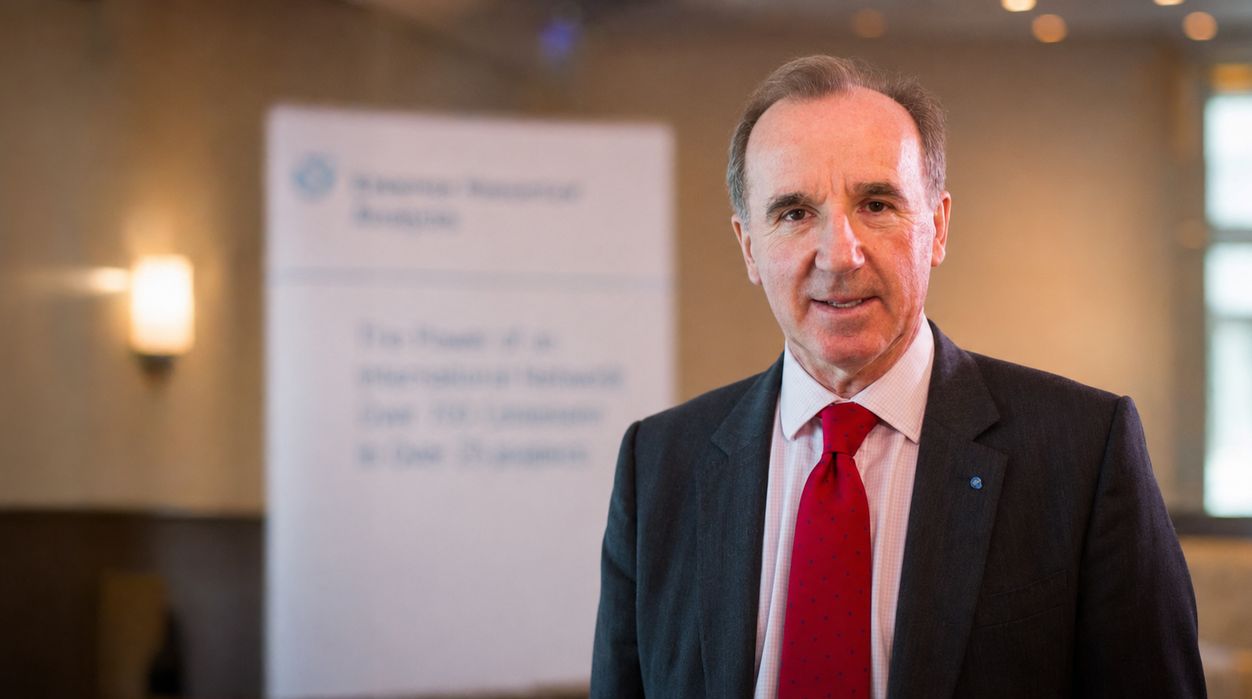
Fred Marfleet reflects on building ERA Group across 60 countries, the senior expertise he wishes he had brought in sooner and why the right team is fundamental to lasting business value.
By Fred Marfleet | Founder of ERA Group and Co-founder of Fractional Leaders Group
A founder usually starts a business alone; however, they cannot build a truly valuable, scalable business alone.
I founded ERA Group in 1993. By the time the business was sold to Horizon Capital in 2025, ERA Group had 1,200 consultants operating across 60 countries, including 800 franchisees, supported by 80 employees. It had become one of the world's largest business consultancy franchises.
Looking back at that scale, it would be easy to present the journey as a sequence of good decisions and steady progress. It was not. We had a strong model, clear ambition, good systems and plenty of persistence, but we also made mistakes that cost us time, money and momentum. Many of those mistakes could have been avoided if I had brought experienced outside expertise into the business earlier.
No one had created quite what ERA Group would become, so there was no established route for me to follow. The model was new; the challenges of building the right team, choosing technology ,developing international marketing and creating the systems required to scale were not.
That is perhaps the most useful lesson I can share with other founders. You do not need to know everything yourself, but you do need to recognise when the business requires knowledge and judgement that do not yet exist around the leadership table.
Growth changes what the business needs from its founder
In the early years, the founder is naturally at the centre of the business. They win the clients, make the decisions, solve the problems and keep everything moving. That energy is often what enables the business to survive and gain momentum.
Growth creates a different requirement. Scaling ERA Group was not simply a matter of recruiting more consultants or entering more countries. Each stage introduced greater complexity and new decisions across franchising, marketing, sales, technology and people. The consequences of getting those decisions wrong also became greater.
By the time ERA Group was operating across 60 countries, the business needed strong functions that could work together, make good decisions and support 1,200 consultants consistently. No founder can provide all of the knowledge and judgement that an organisation at that scale requires.
The founder's role therefore has to evolve. Their responsibility is no longer to provide every answer. It is to make sure the business has access to the right expertise, that capable people have genuine ownership and that the organisation can keep moving without every decision returning to one person.
The right team has to be built deliberately
I recognised from ERA Group's early years that the leadership team would need to grow and evolve with the business.
My difficulty was not a reluctance to delegate. I have always been a strong believer in delegation and leverage, and I have never found it particularly difficult to acknowledge the limits of my own knowledge. The more difficult part was selecting the right people.
Founders can assume that because they understand the business better than anyone else, they will also be able to judge every senior appointment. That is not necessarily true. Knowing that you need stronger leadership is different from knowing precisely what good looks like in a discipline outside your own experience.
I was not always good at choosing the right people, and some appointments were unsuccessful. With hindsight, access to an experienced Fractional CPO/HR Director would have made the process considerably easier. They could have helped us define what the business genuinely needed, assess candidates properly and build a stronger senior team with fewer failures along the way.
Senior people should improve the founder's thinking
The strongest senior people at ERA Group brought experience in franchising, marketing, sales and technology that I did not possess. They were not there simply to implement my ideas, they improved them.
They challenged assumptions, recognised patterns from situations they had encountered before and helped us see risks and opportunities more clearly. Their value was not limited to the workload they removed from me. It was the quality of strategic thinking they introduced into the business.
That distinction matters. A founder who is busy may believe the answer is simply more capacity. Sometimes it is, more often, the business needs someone with the seniority and experience to question the plan, improve the decision and then take responsibility for delivering the outcome.
The best senior people also turn ambition into operating capability. They build stronger functions, establish clearer accountability and give other people the confidence to make decisions. This creates capacity for growth without making the business increasingly dependent on the founder.
Growth rarely presents itself as one neatly defined problem. A sales challenge may expose weak positioning. Expansion may reveal limitations in technology or management information. A growing team may expose unclear responsibilities. Experienced senior people can see how those issues connect and determine what the business needs to build next.
Technology was an expensive lesson
Technology is one area where I would unquestionably act differently. I should have brought a Fractional CTO into ERA Group at least ten years before the sale.
We made a number of technology investments, including management information systems and tender tools designed to help us work with suppliers, which did not deliver what we had hoped. We were working with external suppliers, but we did not always have the senior technical judgement inside the business to challenge their recommendations, translate our commercial requirements or judge whether the proposed solution would support us over the longer term.
A strong CTO would not simply have bought technology on our behalf. They would have been embedded in the business, helped shape the strategy, prioritise the right investments, challenge suppliers and ensure that what we were building genuinely supported the business. That would have saved a great deal of misguided investment and distraction.
I would also have appointed an experienced board adviser much earlier and retained that relationship over many years. Founders benefit from someone who understands the ambition of the business but remains sufficiently independent to challenge the strategy and ask the questions the internal team may not ask.
A stronger business today becomes more valuable tomorrow
The same foundations that allow a business to scale also make it more valuable and less dependent on its founder. I saw this particularly clearly when we began preparing ERA Group for sale.
Approximately five years before the 2025 sale, I appointed a firm with a strong track record of selling comparable franchise businesses. They approached ERA Group as a prospective buyer would. They carried out due diligence and produced a clear assessment of the weaknesses that could reduce confidence in the business or its value.
The most significant issue they identified was succession. I and two other members of the senior management team intended to retire following a sale. As it turns out, I was much better at preparing ERA Group for my retirement than I have been at actually retiring! From a buyer's perspective, that created a serious concentration of risk. Too much experience and responsibility would leave the business at the point ownership changed.
The answer was not to produce a better presentation for prospective buyers. We needed to strengthen the business itself.
We appointed our replacements and deliberately gave them time to establish themselves in their roles. The people we brought in had previous experience of working with private equity, which meant they understood the expectations, pace and reporting requirements that would follow a transaction.
That time was essential. We had the opportunity to transfer responsibility properly and allow the new team to establish its credibility. The work made ERA Group stronger during those five years as well as better prepared for its sale to Horizon Capital.
A buyer is not rewarding the founder for the effort already invested. They are considering what the business can achieve next. They want reliable management information, appropriate technology, strong systems, a credible route to growth and a team capable of making decisions without depending on the founder.
Founders often leave it too late to seek outside advice on how to strengthen their business. By the time they ask for help, they may already have a preferred exit date in mind. Succession, founder dependency, weak management information, unsuitable technology and an underdeveloped leadership team cannot be repaired convincingly in a few months.
Preparing for sale should therefore be understood as part of building a better business, not as a short exercise undertaken when the owner is ready to leave. The changes a serious buyer values are usually the same changes that improve performance, resilience and growth today.
What I would do differently
There was no blueprint for what we built at ERA Group. If I were starting again, I would bring experienced people around me much earlier to help solve the challenges that arise in building something new.
If I were building ERA Group again, I would seek more advice from people who had already solved the individual challenges we faced. No one had built exactly what we were building, yet there was still a great deal I could have learned from people with deeper experience in technology, people, marketing, franchising and strategy.
I would bring experienced people leadership into the business earlier to help me build the right team. I would bring in a Fractional CTO much sooner, before making major technology investments. I would appoint a board adviser to provide consistent strategic challenge over the long term.
None of this would remove every mistake. Building a business will always involve uncertainty and judgement. There is little value, however, in learning an expensive lesson that someone with the right experience could have helped you avoid.
Why we created Fractional Leaders Group
These experiences were a significant part of the thinking behind Fractional Leaders Group.
At the time, I did not realise fractional roles were an option. There were points when I knew ERA Group needed senior expertise, but we could not afford to employ someone at that level full-time. The result was that we sometimes tried to manage without it. Had I known I could access an experienced CFO, CMO, CTO or CPO for the time the business actually needed, I would have done so much earlier.
Many growing businesses reach that same point. The decisions requiring senior expertise do not wait until the business can afford a full-time appointment. Without the right support, founders are left making increasingly important decisions in areas that may sit outside their own experience—and as the business grows, so does the cost of getting those decisions wrong.
Our role is to give ambitious businesses access to senior leaders who contribute strategically and deliver practically. They do not stand at the edge of the business and produce recommendations. They work alongside the founder and leadership team, take ownership and remain involved as the business evolves.
We see these as long-term relationships. Fractional describes how a leader's time is accessed; it should not describe their commitment to the result.
Whether the goal is to scale, resolve a particular constraint or prepare for a future sale, the right time to strengthen the leadership around the founder is well before the need becomes urgent.
The right senior expertise helps you build a stronger business today and a more valuable business for the future, whether you intend to sell it or not.
Speak to us about your next stage of growth
If your business has reached the point where its ambition is outgrowing the leadership capacity around it, Fractional Leaders Group can help you identify the expertise required and introduce a senior leader who will work alongside you for the long term.
Flexible expertise for growing businesses
Whether navigating growth, operational change, or investment preparation, we provide experienced commercial expertise tailored to your business needs.
More from our leadership
Explore guides, case studies, and thought leadership from our fractional executives.
Frequently asked questions
Common questions about fractional services and how they work
What does a Fractional Strategic CTO actually do?
A Strategic CTO/CIO aligns technology vision and execution with overall business goals. This includes defining the technology roadmap, driving digital transformation, modernizing IT infrastructure, fostering innovation, managing cybersecurity, while ensuring technology delivers sustainable competitive advantage and operational excellence.
What is the difference between a CTO and a CIO?
A CIO typically focuses on internal IT operations, infrastructure reliability, cost efficiency, and enabling the business through stable systems. A CTO leans more toward external innovation, product technology, emerging trends, and using technology as a growth engine. Many modern leaders combine both strategic elements depending on the organisation’s needs.
What are the biggest challenges facing CTOs today?
Key challenges include accelerating digital transformation while managing legacy systems, navigating rapid advancements in AI, cloud, and cybersecurity threats, attracting and retaining top tech talent, balancing innovation with operational stability and compliance, and demonstrating clear business value from technology investments in a volatile economic environment.
How do you measure the success of technology strategies?
Success is measured through a balanced set of business-aligned KPIs: system uptime and reliability, speed of delivery (time-to-market for new features), ROI on technology investments, cybersecurity posture, employee productivity gains, customer experience improvements driven by technology, and the overall contribution of tech to revenue growth and competitive differentiation.
What experience and background does your team bring to the CTO role?
With over a hundred combined years in technology leadership across fintech, SaaS, and enterprise environments, we combine deep technical expertise with strong business acumen. We have successfully led large-scale digital transformations, built high-performing engineering teams, and delivered technology strategies that directly accelerated business growth.
How do you approach digital transformation in established organisations?
We start with a clear assessment of current capabilities versus business ambitions, then design a pragmatic roadmap that balances quick wins with long-term modernisation. Success comes from strong executive alignment, change management, incremental delivery, upskilling existing teams, and treating transformation as a business initiative rather than purely a technology project.
What is your philosophy on cloud adoption and modern architectures?
We advocate for a cloud-first mindset where it makes business sense, combined with a thoughtful hybrid or multi-cloud strategy. The focus is on scalability, security, cost optimisation, developer productivity, and building resilient, API-driven architectures that support rapid innovation while maintaining governance and compliance.
How critical is cybersecurity in your technology strategy?
Cybersecurity is not a bolt-on - it is foundational. We embed security-by-design principles into every initiative, promote a culture of shared responsibility, invest in proactive threat detection and response, and ensure compliance with relevant regulations while enabling business agility.
How do you partner with the CEO and executive team?
We act as a true strategic business partner, translating complex technology concepts into clear business language. We bring market and technology insights to the leadership table, align technology investments with strategic priorities, anticipate risks and opportunities, and hold ourselves accountable for technology delivering measurable business outcomes.
What role does emerging technology and innovation play in your approach?
We maintain a balanced innovation portfolio: core (keeping the lights on), adjacent (incremental improvements), and transformational (disruptive opportunities like AI, machine learning, and automation). We use experimentation, proof-of-concepts, and close collaboration with business units to ensure innovation is pragmatic and value-driven.
How do you build and develop high-performing technology teams?
We focus on creating an engineering culture of excellence, psychological safety, continuous learning, and ownership. This includes hiring diverse talent, implementing modern practices (Agile, DevOps, platform engineering), providing clear career growth paths, fostering collaboration between engineering and business teams, and using data to drive decisions about team health and productivity.
What advice would you give to organisations looking to elevate their technology function?
Elevate your technology leader to the executive table and treat technology as a core business driver rather than a cost centre. Invest in modern platforms and talent, break down silos between IT and the business, prioritise cybersecurity and data as strategic assets, foster a culture of experimentation, and relentlessly measure technology initiatives by their impact on customer value and business performance.
.webp)
Enjoyed this insight? Let's discuss what it means for your business.
Every business is different. Speak to one of our experienced fractional leaders about your growth ambitions and operational challenges.